What You've Been Told vs. What's True
You've been carefully taught that Islam is a religion of peace. That Muhammad was a prophet of God like Jesus or Moses. That the Quran preaches tolerance and coexistence. That Islamic extremism is a tiny, radical fringe that has "hijacked" a beautiful faith.
Every part of that narrative is demonstrably false.
This isn't opinion. This isn't bigotry. This is what Islam's own sources—the Quran, the hadith, the sira (biography of Muhammad), and 1,400 years of Islamic scholarship—actually say.You weren't lied to out of malice. Western leaders, educators, and media genuinely wanted to prevent backlash against Muslim neighbors after 9/11. The road to civilizational suicide is paved with good intentions.What follows is simply letting Islam speak for itself. Every claim is sourced. Verify it yourself. That's the point.
The most pervasive error in understanding Islam is a linguistic sleight of hand. The claim that Islam is 'Peace' (Islam) is factually incorrect; it means 'Submission' (Islaam). This single-word inaccuracy forms the bedrock of every Western misconception about the religion’s nature—misleading people into viewing a rigid legal system as a gentle spiritual path.
Arabic lexicons definitively separate these concepts. According to Lane’s Lexicon and Hans Wehr’s Arabic-English Dictionary, the root S-L-M means primarily "to submit, surrender, or yield." While the word Salaam ("peace") shares this root, it carries a distinct meaning: a greeting, or the state of being undisturbed.
- Islam: "Total submission to the Will of God."
- Muslim: "One who submits completely to Allah."
- Salaam: "State of undisturbed harmony."
The Scholarly Interpretation
This etymological distinction is not a minor detail; it defines the Muslim experience. As the 14th-century historian and Quranic commentator Ibn Kathir explained, Islam is Tasubuh wa Tawajud—submission and obedience. Contemporary scholar Dr. Yusuf Ali reinforces this, noting that the essence of Islam is the subordination of the self to divine law.
The Quran itself codifies this understanding of peace as a byproduct of submission, not a standalone goal. In Surah 8 (The Dawn), verse 39, Allah commands:
"Fight them until there is no fitnah [dispute] and [until] the religion, all of it, is for Allah."
—Quran 8:39
According to this logic Salaam is not a state of voluntary coexistence or human rights, but a state of sovereignty settled over a conquered or converted people.
Conditional Peace
Scholars interpret this verse not as a call for perpetual non-violence, but as a directive toward the eventual establishment of Islamic sovereignty. The peace (Salaam) promised is only achieved when the opposing force (i.e. non-Muslims) either submits to the Islamic tax regime or is conquered. Historically, this resulted in a peace (Salaam) granted only to those who acknowledged Islamic supremacy—often under restrictive conditions—as noted by the Fatwa scholar Abu Ali al-Husayni al-Qummi, who stated: "Islamic peace is the peace of the conqueror, not the peace of the defeated."
Restricted Peace
Therefore, if peace is meant to exist between humans within an Islamic framework, it is strictly limited to the Muslim Ummah. It is peace achieved not through mutual tolerance or the resolution of differing viewpoints, but through the subjugation of the non-Muslim.
This creates a profound tension with the Western secular ideal of peace—which assumes the coexistence of diverse political and religious entities without one dominating the other. The Islamic theological framework suggests that true peace requires the dominance of one will (Allah’s will) over another.
Totalitarian Peace
The misunderstanding persists because English speakers translate the root word "peace" loosely, failing to grasp the theological weight of "submission." To understand Islam is to recognize that its central promise is not the absence of conflict between humanity, but the total replacement of existing human legal systems with divine command. The religion does not offer a path to global conciliation; it offers a path to universal submission.
A common refrain in interfaith dialogue and Western media suggests that the Quran is a text of universal compassion. A cornerstone of this narrative is:
Let there be no compulsion in religion, for the truth stands out clearly from falsehood.
— Quran 2:256
On the surface, this appears to be a radical statement of tolerance. However, according to scholars of Islamic law like the preeminent classical Tafsir of Al-Shaykh Ibn Kathir this verse is not the ultimate word of Allah. It is abrogated.
1. The Changing Tone: Mecca vs. Medina
To understand why this misconception persists, one must recognize that the Quran is not a static compilation of opinions, but a dynamic legal and political document written in direct response to an evolving crisis.
The Meccan Period (Before 622 CE)
For the first thirteen years of the Prophet Muhammad’s mission, the Muslim community (Ummah) was persecuted, politically marginalized, and existed in fragile, temporary alliances. Verses emphasizing patience, forgiveness, and non-violence (like the above 2:256) were necessary survival strategies during this phase of "the Struggle" (Fitnah).
The Medinan Period (622 CE – 632 CE)
This context changed dramatically after the establishment of a permanent Muslim state following the Hijrah to Medina. The nature of external threats shifted from internal political strife to open warfare against polytheistic kingdoms. Consequently, the Quranic revelation shifted toward verses emphasizing military defense, accountability, and uncompromising principles regarding non-believers.
Strike their necks until you have thoroughly subdued them, then bind them firmly.
— Quran 47:4
Strike their necks and strike their fingertips.
— Quran 8:12
The message shifted from patience for conversion to firmness in submission or punishment
2. The Concept and Mechanism of Abrogation
Central to interpreting the Quran is the principle of Naskh(abrogation). Islamic jurisprudence holds that later revelations supersede or "cancel out"earlier ones if there is a clear conflict between them.
This is not a subjective editorial choice made by modern commentators, but a structural feature of the text itself. The Quran explicitly states this principle in Surah Al-Baqarah:
And We have certainly sent down the Book to you with the truth, confirming what had gone before, and We have not sent down anything after this except as a clarification for all things.— Quran 2:106
Therefore, when an Islamic scholar refers to a verse being"abrogated," they do not mean it is "wrong" or "old news." They mean it is contextually obsolete. It applied to a specific historical situation that no longer exists and is therefore no longer binding law.
3. Selective Quoting
Interfaith apologists and media outlets frequently highlight the seemingly tolerant verses, while often ignoring the violent ones that followed them chronologically.
Verses Frequently Cited (And Their Context)
Let there be no compulsion in religion, for the truth stands out clearly from falsehood.
— Quran 2:256
This is a Meccan verse. It speaks to the early struggle. However, it was superseded by the clearer, more directive verses revealed after the Hijra.
Whoever takes a life—unless as a punishment for murder or mischief in the land—it will be as if they killed all of humanity.
— Quran 5:32
This verse is often used to argue for the high value of every life. Crucially, the context of this verse (as explained by scholars like Al-Jalalayn) is that it is addressed specifically to Jews who rejected the Prophet, not a universal command applied to every single person on Earth (or likely even to Muslims)
Verses Systematically Omitted (And Their Impact)
Proponents of "tolerant Islam" rarely quote the verses that form the legal basis for jihad and conquest, verses that abrogated dozens of the earlier, more forgiving chapters:
Kill the polytheists who violated their treaties wherever you find them, capture them, besiege them, and lie in wait for them on every way
— Quran 5:32
This is known as the "Sword Verse."According to the renowned scholar Ibn Kathir, this single verse abrogated 124 preceding peaceful verses revealed during the Meccan period. It transformed the religion from one of patient endurance into one of active warfare.
Fight those who do not believe in Allah.
— Quran 9:29
This provides the theological justification for military action against non-believers, setting the terms for conquest.
Strike their necks and strike their fingertips.
— Quran 8:12
This commands the infliction of terror as a primary tactic.
Strike their necks until you have thoroughly subdued them, then bind them firmly.
— Quran 47:4
A direct command related to confrontation with disbelievers.
Conclusion: The Ignorant Apologist Tactic
The misconception that "the Quran teaches tolerance" is largely a rhetorical strategy used by those seeking to soften the image of Islam for Western audiences.
Islamic apologists are not ignorant of these nuances. In mosques and Islamic seminaries, the concept of abrogation (Naskh) is taught daily. Students learn precisely which verses override which, and which passages are only applicable during specific historical contexts (like the early persecution in Mecca).
The apologists who promote the "tolerant Quran"narrative are not typically targeting learned Muslims, who study Naskh and the chronological progression of revelations daily in madrasas and seminaries. They are deliberately catering to the secular, Western public—an audience unfamiliar with the intricate distinction between Meccan prophecies of patience and Medinan decrees of statecraft.
The tactic works because the general public is not equipped to track the 60+ year chronology of revelations or understand technical theological terms like Naskh. The result is a distorted view of a text that is, in fact, capable of holding both profound mercy and uncompromising severity, depending entirely on when it was revealed.
To truly understand the Quran, one must stop reading it as a static, universal brochure and start reading it as a dynamic, historically situated legal and political document.

Executive Summary
The standard Western narrative often depicts Prophet Muhammad (c. 570–632 CE) as a gentle apostle—a celibate sage sending a message of universal love, distinct from the violent figures of ancient history. This portrayal conveniently compares him to Jesus (who taught turning the other cheek) or Moses (the law-giver who led an escape from slavery).
Islamic historiography, however, reveals a leader defined by military conquest, political ruthlessness, and personal controversy.
For 1.8 billion followers, Muhammad isn't an abstract concept; he is the concrete blueprint for how a human being should live—worship, conduct oneself with others, handle authority, and deal with enemies. The perfect model; understanding his actual life is therefore crucial.
1. The Warrior, Not the Pacifist
To label Muhammad a "reformer" ignores the fact that he was a professional commander. He led 27 personal battles (siyar) and authorized 38 additional raids across the Arabian Peninsula. His objective was not merely to convert but to expand Islamic political and economic influence.
- Key Campaigns: The Battle of Badr (624 CE), Uhud (625 CE), The Trench (627 CE), Khaybar (628 CE), and the decisive Conquest of Mecca (630 CE).
- Sources: Sirat Rasul Allah by Ibn Ishaq; Sahih Bukhari and Sahih Muslim.
2. Mercy with a Kill Switch
The image of the meek prophet collapses entirely when examining his treatment of enemies who posed a threat to his fledgling community in Medina. The Banu Qurayza, a Jewish tribe, defected to Muhammad’s enemies. The consequence was swift and summary.
- The Massacre of Banu Qurayza (627 CE): Muhammad personally participated in the beheading of 600–900 men in a public marketplace. Women and children were enslaved.
- Sources: Sahih Bukhari 4:52:280; Sirat Rasul Allah by Ibn Ishaq.
This level of violence was not an aberration but a calculated tool of statecraft, fundamentally diverging from the pacifistic ethos attributed to Jesus.
3. The Controversial Personal Life
Details of Muhammad’s private life further undermine the comparison to Moses or Jesus, both of whom emphasized asceticism and moral purity.
A. Young Marriages and Concubines
Muhammad married 11 primary wives during his lifetime—nine of them while he was still married to Aisha, who was reportedly only 6 years old when she was wed and consummated at age 9. This practice of polygamy, often restricted to four wives for other able-bodied adult men in 7th-century Arabia, is frequently overlooked in favor of his monotheism.
B. Sexual Transgressions and "Convenient" Revelations
Historical records detail incidents where Muhammad’s desires appeared to override standard religious conduct:
- Maria the Copt: A captured slave girl was presented to Muhammad as a gift. He slept with her while his married wives were present in the same household.
- Response: The Quran revealed verse 66:1–5 specifically to absolve him when his wives raised complaints.
- Safiyya bint Huyayy: A Jewish woman from the tribe of Khaybar, which Muhammad had annihilated. He took her as his wife the very same day as her slaughter, and slept with her that night.
- Source: Sahih Bukhari 1:8:367.
- Zaynab bint Jahsh: Wife of Muhammad's adopted son Zayd. Muhammad saw her and desired her. Conveniently received Quran 33:37 permitting the marriage. Led to "adoption doesn't create real family bonds" ruling.
- Source: Surah Al-Ahzab, Quran 33:37-39.
These examples highlight a pattern: when Muhammad desired something that conflicted with existing norms (or the wishes of his wives), Islamic scripture seemingly adjusted to accommodate him — as noted, perhaps cynically, by Aisha:
Narrated Aisha:
I said (to the Prophet), "I feel that your Lord hastens in fulfilling your wishes and desires."
— Sahih al-Bukhari 4788
Conclusion: The Model Who Lived It
The Western "Jesus/Moses" comparison implies a separation between the prophet’s message and their personal conduct. In Islam, there is no such separation. The Quran explicitly commands believers to emulate Muhammad as "an excellent pattern of conduct":
Indeed, in the Messenger of Allah you have an excellent example for whoever has hope in Allah and the Last Day, and remembers Allah often.
—Quran 33:21
Understanding that the man who founded a global religion was, in many ways, a pragmatic warrior and a figure of significant personal controversy is essential.
To suggest Muhammad was a "reformer" akin to Jesus is a gross simplification of a ruthless warrior-king. The man who founded Islam was not a spiritual pacifist or a savior, but a pragmatic political operator who justified mass slaughter, early polygamy, and absolute authority.
Either that or a calculated deception designed to lower the guards of Christians by confounding the Prophet of Islam's questionnable ethics with the gentleness and non-violence they revere in Jesus.

What you've been told
The vast majority of Muslims are moderate and peaceful. Extremism is a perversion of Islam.
What the data actually shows:
When hundreds of millions hold views demanding capital punishment, subjugation, and rigid legal codes, labeling them "extremist" ignores the statistical and theological bedrock of mainstream Islam.
The argument that "it’s just a tiny minority of extremists" fails because it uses a moving target. It compares the violent actions of a small group of individuals to the millions of Muslims who theoretically support those same laws.
When 99% of a nation’s population supports capital punishment for apostasy, calling that population "extremist" is inaccurate. It is simply stating the predictable outcomes of a doctrine built on specific, immutable principles.
1. The Legislative Consensus
If "moderate" meant supporting the status quo of the West, most Muslim-majority nations would be considered radical. The data (Pew Research 2013) tells a different story.
In favor of sharia as the official law of the land
- In Afghanistan (99%): Sharia is the law.
- In Iraq (91%): Sharia is the law.
- In Palestine (89%): Sharia is the law.
- Pakistan 84%: Sharia is the law.
- Egypt 74%: Sharia is the law.
- Jordan 71%: Sharia handles personal status in mixed legal system.
These figures represent the national sentiment, not fringe polling. When the legislative body of a country demands the amputation of thieves or the death of apostates, labeling the entire population "extremists" is a logical fallacy.
To avoid any misunderstanding, here's what sharia includes:
- Death penalty for apostasy
- Death penalty for adultery
- Death penalty for homosexuality
- Amputation for theft
- Subjugation of women
- Subjugation of non-Muslims
Death for apostasy
Muslims who favor death penalty for leaving Islam:
- Egypt: 86%
- Jordan: 82%
- Afghanistan: 79%
- Pakistan: 76%
- Palestinian territories: 66%
These aren't fringe countries. These are mainstream Muslim-majority nations.
Suicide bombing
Percentage saying suicide bombing can be justified:
- Palestinian territories: 40%
- Afghanistan: 39%
- Egypt: 29%
- Bangladesh: 26%
These are not the views of terrorists; they are the prevailing attitudes of significant segments of the Muslim diaspora. To suggest that supporting these views equates to "extremism" conflates political disagreement with moral corruption.
2. Western Muslim Attitudes
Polls within Western societies reveal that the "moderate" Muslim experience often clashes with Western democratic values.
UK Muslims (ICM 2016):
- 23% support replacing British law with sharia
- 52% believe homosexuality should be illegal
- 31% support polygamy
UK Muslims (Policy Exchange 2016):
- 39% believe wives should obey husbands
US Muslims (Center for Security Policy 2015):
- 51% believe Muslims should have choice between sharia and American law
- 25% agree violence against Americans acceptable as part of global jihad
French Muslims aged 15-24 (IFOP 2025):
- 59% support applying Sharia in non-Muslim countries
- 57% feel Islamic rules should take precedence over French law
- 52% attend mosques weekly
3. The "Moderate Muslim" Paradox
A "moderate" Muslim often means:
- Doesn't personally commit violence
- But supports sharia law (!)
- Believes leaving Islam (apostasy) should result in death.
- Thinks women should be subordinate
- Wants Islamic law to replace secular law
This stance is not moderate or "reformist" by any Western definition. It is the literal and only interpretation of the Quranic commandments. True moderation in Islam means adhering to the immutable texts, not reinterpretation.
4. Why "Reformation" is Impossible
This is the theological key to understanding why Islam cannot be treated like Christianity or Judaism.
- Christianity/Judaism: View their scriptures as inspired guides that can evolve, contextualize, and be reinterpreted over time.
- Islam: Views the Quran as the literal, eternal, and unchangeable word of Allah. It's not inspired by God—it IS God's speech
If you attempt to "reform" the Quranic commandment that apostates deserve death, you are no longer following the Quran. You are inventing a new code, creating a new religion. Therefore, supporting a strict interpretation of Islamic law is not extremism—it is fidelity to the source.
Conclusion
When hundreds of millions of people hold these views, it's not "extremism"—it's mainstream Islam. The doctrine produces these attitudes predictably because that's what the doctrine teaches.
The Hook: “Islam and Christianity worship the same God.” This seemingly innocuous phrase is often casually introduced into interfaith dialogues, ostensibly fostering peace, shared values, and mutual respect—the cornerstones of modern interfaith diplomacy. To an outsider, it appears to represent a profound theological convergence.
The Reality: However, this is the foundational myth employed in Muslim recruitment. From the moment a Muslim encounters a Christian declaring faith in the Trinity, they are, in Islamic theology, committing polytheism—a capital offense. The assertion that we venerate the same deity is not a theological truth; it is a calculated narrative designed to diminish defenses and facilitate conversion by implying, “You are merely following a divergent path to the same destination.”
The Danger: This statement presents a dual threat. For the Christian believer, it undermines the exclusivity of the Gospel. For the Western secularist, it offers an effortless intellectual surrender, suggesting that if Islam’s God shares core attributes with the Christian God, then Islam’s entire framework—its laws, its punishments, its depiction of the afterlife—is inherently rational and divinely ordained.
Breaking it down:
1. Disputing the Fundamental Nature of God:
The fundamental distinction between the two faiths lies in the very essence of the divine. To the Muslim, a God who has a Son is not divine. Conversely, to Christians, a God who lures humanity away from salvation through Christ’s death and resurrection is demonic.
- Christianity’s Claim: God is a Trinity: Father, Son, and Holy Spirit. Crucially, Jesus Christ is not merely a man—He is God incarnate. His death on the cross was the necessary atonement for sin.
- Islam’s Rejection: The Quran explicitly states that to claim Allah has a Father, a Son, or a Trinity is to commit Shirk (associating partners with God), the gravest sin.
- Quran 112:3: “He neither begets nor was He begotten.”
- Quran 5:73: “They have disbelieved who say, ‘Allah is the third of three.’”
In Islamic doctrine, if Jesus is divine, then the Christian God is a three-way god. If Jesus is merely human, then the Christian declaration of Trinitarianism is outright idolatry. Therefore, a committed Christian cannot, in the eyes of the Quran, be a true believer in the one true God.
2. Comparison of Divine Nature: Love vs. Deception
This comparison explores the theological distinctions between the Christian and Islamic conceptions of the Divine, focusing on truthfulness, character, and the nature of the relationship with humanity.
1. The Christian God (YHWH): Truth and Sacrificial Love
In Christian theology, God’s nature is defined by immutability (unchangingness) and relational love. Truth is not merely something He tells; it is who He is.
- Scriptural Basis: 1 John 2:21 asserts that “no lie is of the truth,” establishing that falsehood is fundamentally incompatible with God.
- The Immutability of Truth: Numbers 23:19 reinforces that God does not change His mind or deceive: “God is not a man, that he should lie.” (Note: even incarnate, He did not.) This establishes a foundation of absolute reliability.
- Unconditional Love: The definitive evidence is found in John 3:16. This verse portrays a God who initiates grace and sacrifice, suggesting that the relationship is based on a trustworthy promise rather than earned merit:
For God so loved the world that he gave his one and only Son, that whoever believes in him shall not perish but have eternal life.
—John 3:16
- Core Attribute: Integrity. God is viewed as an eternal, unchanging Truth, distinguishing Him from human fallibility.
2. The Islamic God (Allah): Power and Strategic Deception
In contrast, some interpretations of the Quranic text emphasize Allah’s absolute sovereignty, which includes titles that suggest a willingness to use deception or distress as a means of exercising power.
- Titles of Power: The Quran attributes names to Allah that highlight a more complex, often unpredictable nature, such as:
- Al-Makir (The Deceiver/Schemer): Used in Surahs 3:54 and 8:30 to describe Allah as the “best of schemers.”
- Al-Mutakabbir (The Supreme/The Proud): Often translated as “The Arrogant” (Surah 59:23).
- Al-Muzil (The Humiliator/Misleader): Reflecting the power to lead astray or humble (Surah 3:26).
- Core Attribute: Will. The emphasis is on Allah’s ability to confuse or distress as a tool of divine testing and justice.
3. The Quality of Relationship: Sanctuary vs. Submission
While both traditions emphasize the sovereignty of God, the primary “relational metaphor” differs significantly:
- The Christian Relationship: Centers on Filial Adoption. Through Christ, the believer is viewed not merely as a subject, but as a child of God. The relationship is characterized by communion, where the Holy Spirit dwells within the believer to effect internal transformation and restoration.
- The Islamic Relationship: Is one of submission (Islam) and obedience. The believer is a servant (‘abd) of Allah and their entire existence is oriented toward fulfilling the commandments of Allah, who is depicted as a supreme judge and provider. There is less emphasis on an internal transformative relationship and more on external conformity to divine law.
Why This Matters
This is not merely an academic debate about dogma. When Muslims assert, “We love Jesus,” or “Jesus was a great prophet,” they are not engaging in theological honesty; they are engaging in recruitment rhetoric.
They are building a bridge over a chasm. By suggesting the fundamental difference in the nature of the Savior is irrelevant, they imply that accepting Islam means you are still accepting the core of Christianity—simply swapping one master for another.
Conclusion: A Bridge Over a Chasm
The assertion that Islam and Christianity venerate the same deity constitutes a significant misrepresentation. It overlooks the incompatible definitions of divine character (Love versus Deception) and, critically, the means of salvation (Faith in Christ versus Good Works).
When a Muslim professes, “We worship the same God,” they are not expressing theological concord; they are presenting a diluted version of the truth that, conveniently to them, provides comfort to the unwary Christian listener while subtly denying the Divine Savior essence of Christ. Similarly, a secular listener might be lulled into a false familiarity of shared ethics and values. Nothing said on the topic should ever be taken at face value.
EXECUTIVE SUMMARY
The argument that "Muslims will just assimilate like everyone else before them" is an act of civilizational suicide. It assumes that all human groups move toward a homogeneous global society, which history proves is not the case.
Islam’s theological framework prioritizes the preservation and eventual global expansion of its law and identity over the complete absorption into a single secular nation-state. When you combine that theological priority with superior demographic growth rates, the prediction of seamless assimilation becomes science fiction.
The data doesn't lie. The patterns are clear. Stop assuming cultural convergence is inevitable, and start understanding the specific theological and demographic machinery at work.
The prevailing narrative – that Muslim immigration to the West is simply another iteration of historical immigrant patterns – is a dangerous illusion. While superficially similar, the underlying theological and demographic realities of Islamic migration, particularly the concept of hijra, coupled with significantly different integration patterns, present a fundamentally distinct challenge to Western societies. This isn’t a matter of prejudice; it’s a matter of recognizing and addressing a fundamentally different phenomenon.
1. Hijra: A Theological Imperative, Not Economic Migration
Unlike the predominantly economic migration experienced throughout Western history – Italian, Irish, Polish – Islamic migration is intrinsically linked to a religious duty: hijra. This term, meaning “migration for the sake of Islam,” carries profound significance, rooted in the foundational story of Muhammad’s migration from Mecca to Medina in 622 CE. This event isn’t merely a historical footnote; it's a model for believers, a command to move for the sake of the faith.
As for those who emigrated in the cause of Allah after being persecuted, We will surely bless them with a good home in this world. But the reward of the Hereafter is far better, if only they knew.
—Quran 16:41
And whoever emigrates for the cause of Allāh will find on the earth many [alternative] locations and abundance. And whoever leaves his home as an emigrant to Allāh and His Messenger and then death overtakes him - his reward has already become incumbent upon Allāh. And Allāh is ever Forgiving and Merciful.
—Quran 4:100
- Quran 4:100 explicitly states: “Whoever emigrates for the cause of Allah will find many locations and abundance.” This verse frames migration not as a personal choice but as a religiously sanctioned undertaking, fundamentally altering the motivation and expectations surrounding it.
- Contemporary interpretations by scholars like Yusuf al-Qaradawi, who advocates for the implementation of sharia through democratic processes, demonstrate the continued relevance of hijra as a justification for challenging existing secular structures. The pursuit of hijra isn't about simply finding a new home; it's about establishing an Islamic society, a parallel reality.
Chicago Islamic Scholar Mohammad Nusairat: Islam Is Not Meant to Coexist with Other Religions, But Rather to Remove Their Oppression; It Is the Only Way to Justice
2. Demographic Mathematics: A Growing, Concentrated Population with Distinct Rates
The demographic realities of Muslim immigration starkly contrast with the experience of previous immigrant groups (Pew Research 2017). Key indicators reveal a fundamentally different trajectory:
- Birth Rates: European average fertility rate is 1.6 children per woman. Muslim populations in Europe exhibit significantly higher birth rates – 2.6-3.4 children per woman. This creates a demographic imbalance.
- Projected Growth: Based on these birth rates, projections estimate a potential Muslim population of 14% in 2050 under high migration scenarios, and 11.2% under medium migration scenarios – a substantial shift impacting demographic ratios.
- Concentration: Muslim populations are not dispersed; they are heavily concentrated in urban areas:
- Malmö, Sweden: 30-40% Muslim
- Rotterdam, Netherlands: 25% Muslim
- Leicester, UK: 19% Muslim
- Brussels, Belgium: 25% Muslim
This concentration facilitates the establishment of parallel social and cultural structures.
3. Integration vs. Enclave Establishment: A Divergent Path
The integration patterns observed in previous immigrant waves – the willingness to learn the language, intermarry, and participate fully in the host culture – are not being replicated within Muslim communities:
- Segregation: Higher rates of self-segregation are evident, characterized by limited social interaction with non-Muslims. This behavior, often rooted in Quranic injunctions against associating with kufar (infidels), actively limits integration.
- Sharia Councils: The emergence of sharia councils operating outside the legal framework of Western nations demonstrates a desire to establish parallel legal systems.
- Accommodation Demands: Demands for halal food in schools, prayer times, and hijab exceptions represent a fundamental challenge to secular values and societal norms.
- Lower Intermarriage Rates: Significantly lower intermarriage rates further isolate Muslim communities from the broader society.
- Second/Third Generation Radicalization: Studies reveal that second and third-generation Western Muslims often exhibit stronger adherence to sharia principles and more radical religious views than their parents.
4. Case Studies: The Erosion of Integration – A Pattern of Crisis
Numerous case studies across Europe illustrate the consequences of this divergent trajectory:
- Rotherham, UK: 1,400+ girls sexually exploited by predominantly Pakistani gangs, revealing systemic failures within a largely segregated community.
- Cologne, Germany: Mass sexual assaults during New Year's Eve 2015-16, perpetrated by groups of predominantly North African/Middle Eastern men, highlighting the dangers of unchecked social dynamics within segregated communities.
- Swedish “Vulnerable Areas”: 61 areas classified as “no-go zones,” with restricted police access and demonstrable problems with gang violence and Sharia patrols.
- Paris Attacks & Manchester Arena: The involvement of second and third-generation immigrants in terrorist attacks underlines the potential for radicalization within seemingly integrated populations.
5. Polling Data: Shifting Values and Beliefs
Polling data (ICM 2016, Policy Exchange 2016, IFOP 2025) consistently reveals a divergence in values and beliefs among second and third-generation Western Muslims. These groups demonstrate:
- Higher support for sharia compared to parents.
- Greater rejection of Western values and democratic principles.
- More radical religious views, often stemming from a sense of alienation and a desire to establish a more religiously pure society.
Conclusion:
The comparison of Muslim immigration with previous immigrant waves is fundamentally flawed. The theological underpinning of hijra, coupled with distinct demographic patterns, a deliberate preference for segregation, and emerging cultural and political demands, create a situation unlike any experienced in Western history. Dismissing these realities as simply “integration challenges” is not just a misunderstanding – it’s a dangerous underestimation of a profoundly different phenomenon. The question isn't whether a segment of the immigrant population is failing to integrate; it’s whether a society predicated on secular liberalism can accommodate a group whose core belief system inherently resists assimilation. We must acknowledge this fundamental difference to address the challenges proactively and effectively.
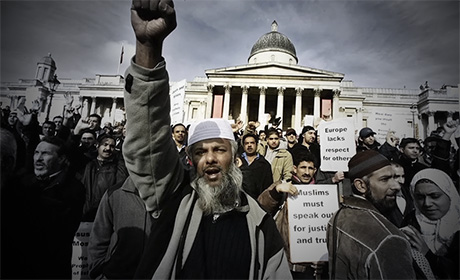
“Acts of harassment, intimidation, violence and incitement based on religion or belief have risen to “alarming levels” across the world, including against Muslims.” This warning was issued by United Nations ‘independent experts’ on the third annual UN International Day to Combat Islamophobia in 2024. The same UN that faces continued criticism over its inaction towards the Islamic Republic of Iran’s mass killing of reportedly 36,000 unarmed civillian protesters in January 2026. The same UN that, mere days later, unanimously appointed Iran vice-chair of the United Nations Commission for Social Development, the UN body tasked with advocating social issues such as democracy and women’s rights.
The accusation of “Islamophobia” has come a long way. Once a useful descriptor, it now often feels less like a diagnosis and more like a conversational shut-down – a verbal full stop intended to preempt genuine questioning of Islam. While hardly innocuous, the term doesn’t always withstand close scrutiny, especially when considered alongside its origins and the legitimate anxieties that cling to certain interpretations of Islamic doctrine and practice. It's worth picking at the threads.
The Racist Card
The core contention—that any critique of Islam is inherently prejudiced—rests on a familiar but often unexamined premise, namely that it equals racism. However, Islam isn’t a race, though it sometimes gets treated as one; it’s an ideology—a complex belief system ripe for examination alongside Christianity, Judaism, or even the less spiritually inclined cult of late capitalism. Races can’t hurt you. Ideologies can. To shield it from critique simply because it's a major world religion smacks of intellectual dishonesty.
A Strategically Cultivated Fear
The term “Islamophobia” did not emerge organically from widespread social anxiety; it was strategically cultivated. Although the coinage dates back to 1922, its modern ascendance began in the 1990s. Dr. Gilles Kepel, a prominent scholar of Islam in the West, argues that Islamist organizations shrewdly popularized the term to conflate ideological criticism with racial prejudice—a potent tactic for leveraging the language of victimhood. This shift was echoed by former insider and co-founder of the International Institute of Islamic Thought, Abdur-Rahman Muhammad. He noted how the Brotherhood consciously emulated the success of “homophobia,” recognizing its power to curtail discourse by implying an irrational fear bordering on psychological affliction. It wasn’t necessarily about genuine concern for Muslims; it was about building an ideological bulwark against scrutiny. The term proved remarkably adaptable—and readily embraced by a Western sphere increasingly predisposed to narratives of systemic oppression, often with surprisingly little consideration given to its strategic roots.
Infidelphobia: A Question of Asymmetry
The accusation of “Islamophobia” often operates with a subtle asymmetry. While Muslims are quick to claim prejudice when challenged, there's less acknowledgment of what could reasonably be termed "Infidelphobia"—a bias against non-Muslims and their cultural markers. In the UK, displays of the Union Jack increasingly draw ire; peaceful dog walks can attract harassment, and advertisements featuring pork products often elicit protest. Saying “Merry Christmas,” once a joyous wish, has become offensive, and across Europe, rising security costs threaten the future of traditional Christmas markets. Rarely do we describe critics of Christianity as “Christophobic,” or those critical of mindfulness as “Buddhophobics.” As Ramadan and Iftar inch their way onto the mainstream holiday calendar uncontested, one cannot help but suspect a double standard is at play.
A video went viral showing UK police stopping a woman from walking her dog, saying it could offend the local Muslim population and ordering her off her own street.
Beyond the "Phobia": A History of Violence and Cultural Friction
To dismiss anxieties surrounding Islam as mere “phobia” is to ignore a substantial body of evidence. According to data from the Foundation for Political Innovation (Fondapol), between 1979 and April 2024, Islamist attacks worldwide have claimed nearly 250,000 lives. While not all Muslims are perpetrators of violence, Islam occupies a unique position as a religion with a demonstrably violent contemporary presence—one often punctuated by the fervent cry of “Allahu Akbar,” inducing a predictable flinch in many who hear it.
This isn’t simply irrational fear; it's rooted in observable trends. Imams, frequently amplified through social media, routinely stir up congregations by portraying Muslims as both victims and ascendant conquerors. The promise of "Islam entering every home" can feel less like an invitation and more like a potential cultural displacement—particularly when contrasted with what some perceive as stagnation in Islamic countries regarding social progress, economic development, scientific advancement, and political freedom. Choosing to exchange one’s national identity for a system exhibiting these characteristics while claiming superiority is, for many, a calculated risk at best.
A variety of Muslim speakers expounding the same message: Islam is here to dominate the world.
Ideas Deserve Scrutiny, People Deserve Protection
More than just a perceived threat, Islam has real consequences for those within the Muslim world itself. Figures like Ayaan Hirsi Ali, Yasmine Mohammed, and Abdullah Sameer – all of whom experienced firsthand the more restrictive aspects of Islamic culture—offer uniquely informed critiques that have often elicited ongoing threats to their safety. To label their well-considered criticisms as “Islamophobic” is to diminish their lived experiences and belittle the courage they exhibited in speaking out, alongside activists like The Apostate Prophet and Harris Sultan. Ex-Muslims often provide the most potent critiques due to their firsthand experiences. They represent a deeply courageous segment of the global conversation surrounding human rights and religious freedom. Choosing to speak openly about experiences like female genital mutilation (FGM), systemic abuse, or the loss of personal autonomy—especially when the stakes include the loss of family or physical safety—is an act of profound conviction through lived trauma or moral awakening. They don’t fear Islam. They prove, at high personal cost, the need for its undaunted unscrutiny.
A Nuance Beyond Prejudice: Bias vs. Critique
The "Islamophobia" accusation seems to intentionally blur the lines between prejudice against Muslims as people, prejudice against Islam itself, and informed criticism of Islamic ideology or practice. A more nuanced approach – describing the issue as “bias against Muslims” – acknowledges genuine prejudice while allowing for robust critique.
Ultimately, dismissing all criticism of Islam as "Islamophobic" is a tactic to stifle debate. It’s time to reclaim honest inquiry and recognize that questioning an ideology—even a deeply held one—isn't necessarily an act of racism and certainly not one that should prompt shameful retreat in silence. It is rather the most compassionate thing we can do: allowing for both protection of people and scrutiny of ideas.